Explore natural frequencies, mode shapes, and harmonic response, all within an intuitive, high-performance cloud environment. SimScale’s vibration analysis tools let you iterate on designs in minutes, not days, so you go into physical testing with confidence.


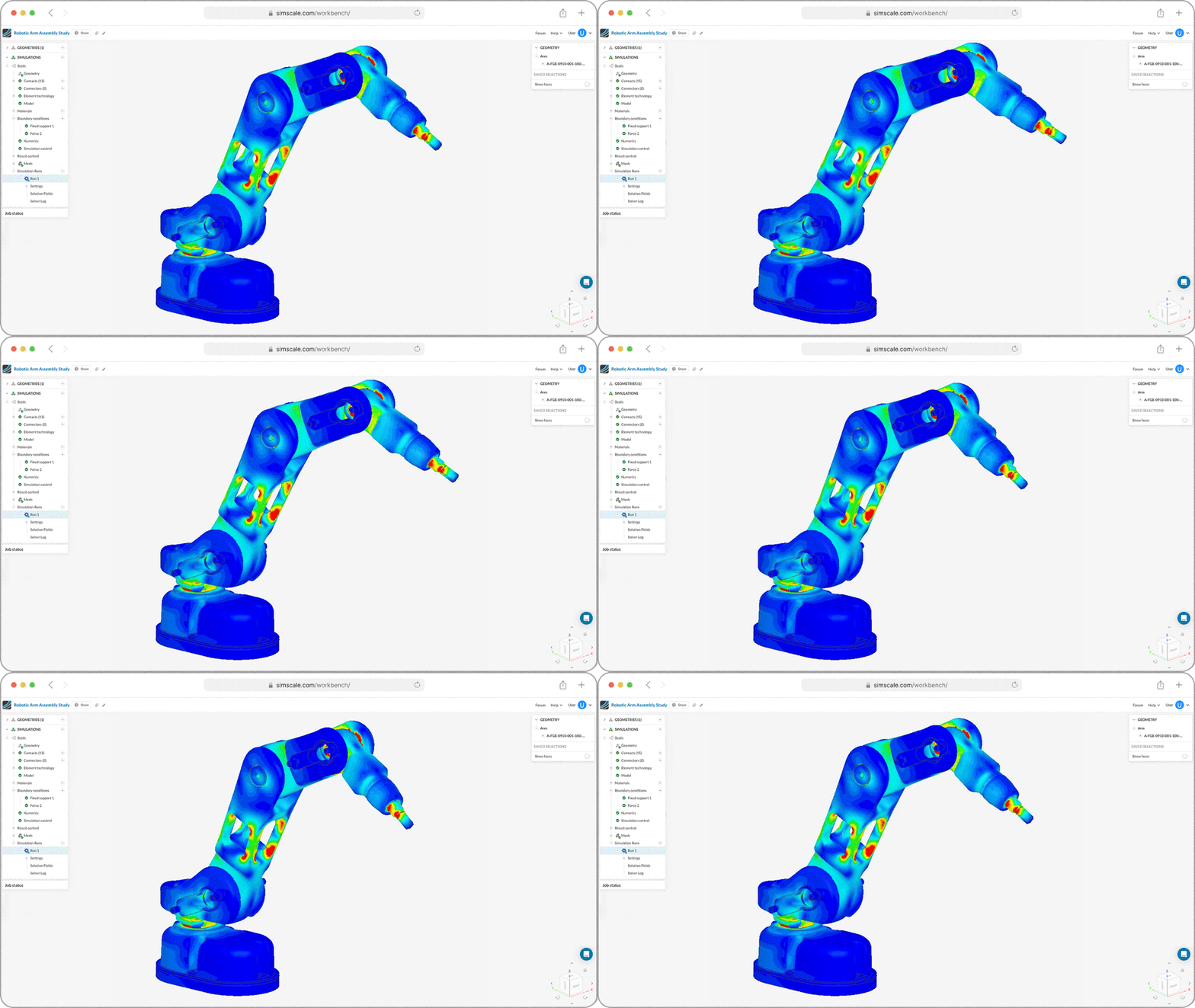











Leverage Engineering AI to automate simulation setup and Physics AI for instant predictions. Explore thousands of design alternatives in seconds, enabling every engineer, not just simulation specialists, to predict natural frequencies, identify resonance risks, and optimize structural integrity.
Check Simulation Features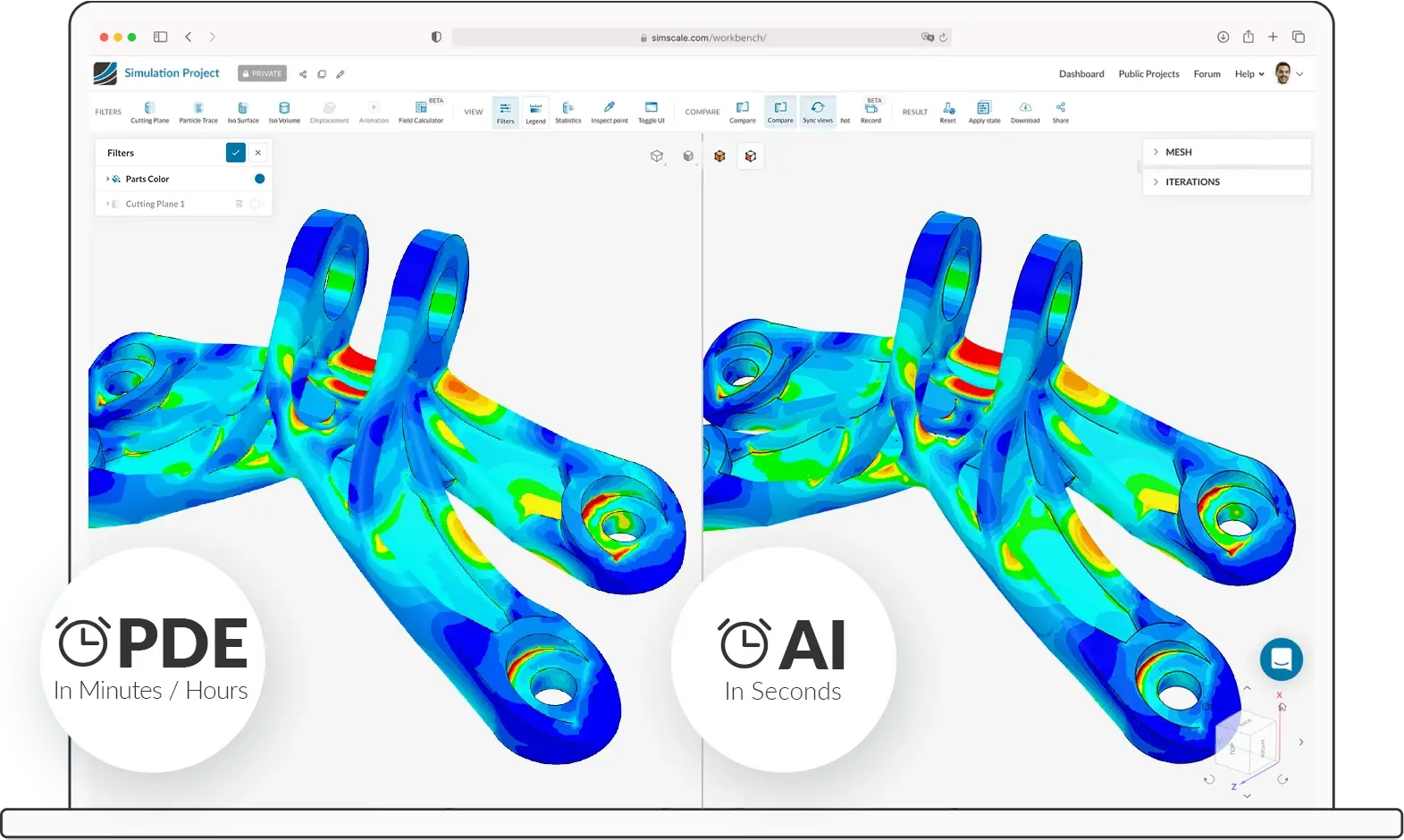
Use Physics AI surrogates and Engineering AI copilots to get vibration predictions in seconds. Explore hundreds of design variants (bracket geometries, mounting configurations, material selections) and identify winning concepts before committing to high-fidelity modal or harmonic analysis.
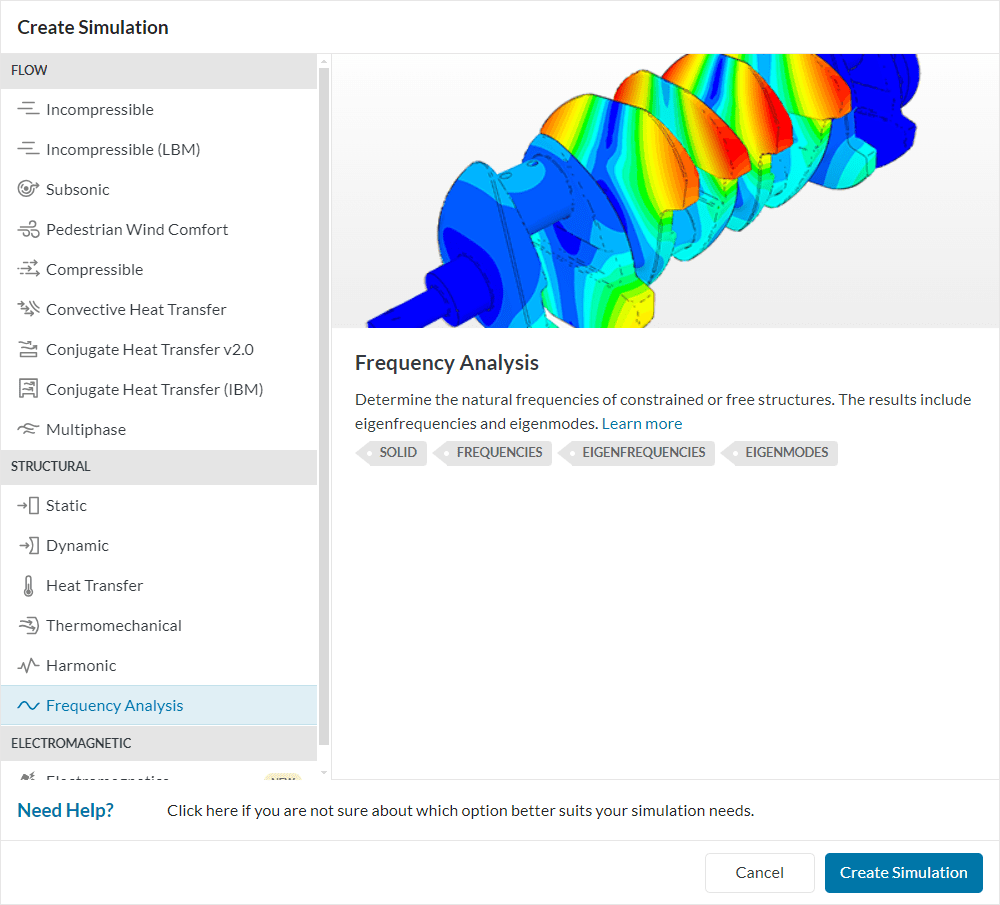
Check AI FeaturesScreen designs for vibration and resonance risk early by calculating eigenfrequencies and eigenmodes. Import your CAD model, define boundary conditions, and run modal analysis on complex assemblies with results rendered as interactive 3D visualizations.

Map stress, displacement, and velocity across a range of excitation frequencies to identify resonance peaks and validate damping strategies. SimScale’s harmonic solver supports both direct and modal-based approaches, so you can balance accuracy with computational speed depending on your design stage.
Capture your structure’s response to time-varying loads (sudden impacts, seismic events, transportation shock profiles, random vibration excitations) and validate designs against physical test standards like MIL-STD-810, IEC 60068, and UN 38.3 before committing to lab testing.

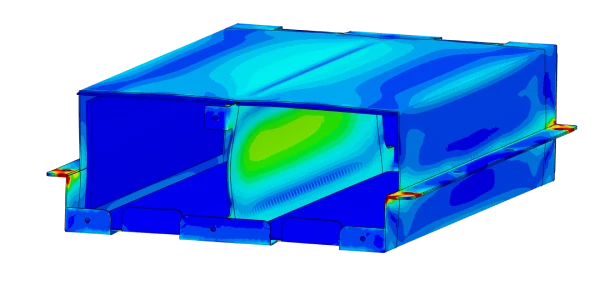
Simulate the full UN 38.3 vibration test spectrum (sinusoidal sweeps, random vibration profiles, shock pulses) on your battery pack design. Identify structural weak points in cell holders, bus bars, and enclosures, then iterate virtually to optimize survivability before physical certification.
Use rotational modal analysis to generate Campbell diagrams, spot critical resonance speeds, and validate bearing support structures for motors, pumps, turbines, and fans. Assess casings, baseplates, and mounting brackets against unbalance forces, misalignment, and shock loads.
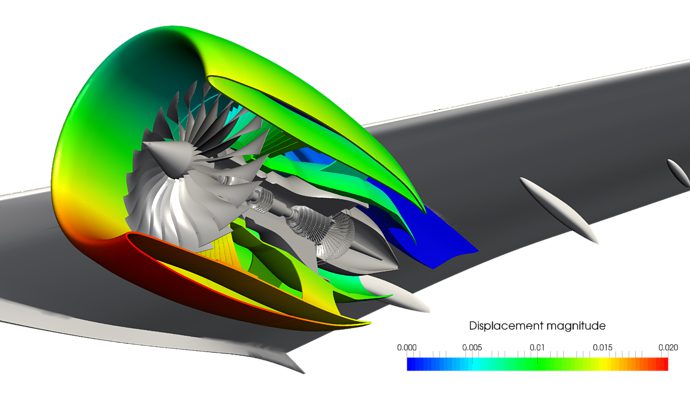
Simulate DO-160, MIL-STD-810, and DEF STAN 00-35 vibration environments virtually to qualify designs early. Run dozens of load cases in parallel, testing multiple mounting configurations and material choices simultaneously.
Use frequency response analysis to predict how vibration energy propagates through structures and identify paths that radiate unwanted noise. Optimize bracket stiffness, add strategic damping, and validate enclosure designs before building hardware.
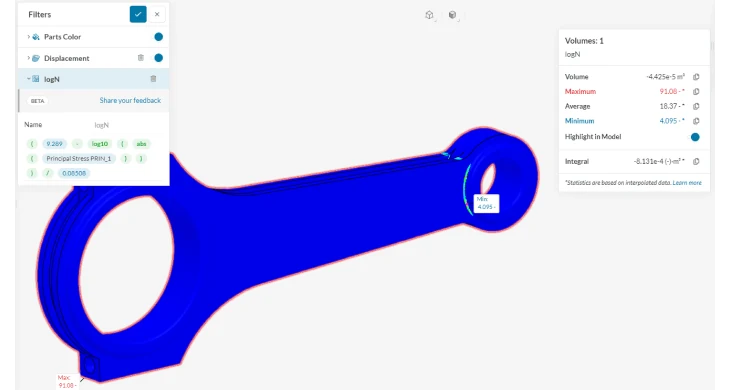
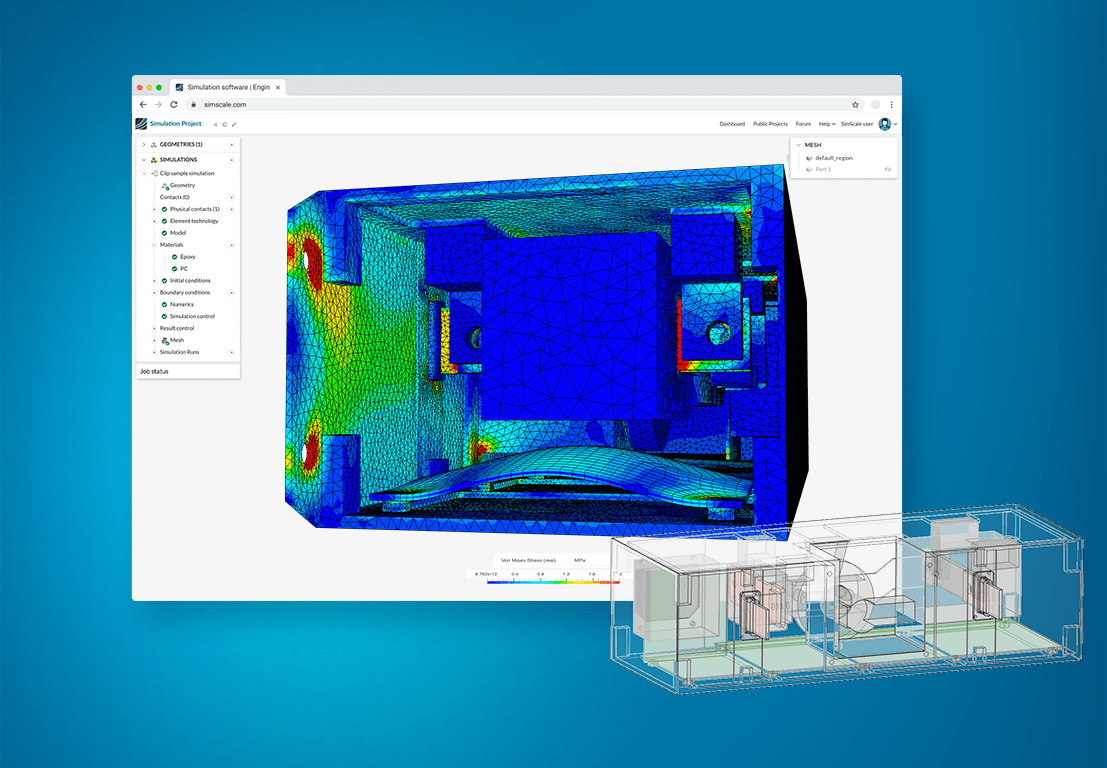
TechSAT uses simulation at the conceptual phase to find the best structural design approaches for maintaining the survivability of electrical equipment against vibration. Using SimScale, they specified evidence-based approaches against vibration while minimizing their need for physical prototyping, saving €15k in licensing and hardware costs.
Check out the latest thermal management simulations performed in SimScale and validated against experimental and/or analytical results.
Check out the latest thermal management simulations performed in SimScale and validated against experimental and/or analytical results.
Check out the latest thermal management simulations performed in SimScale and validated against experimental and/or analytical results.
Subscription Plans Adapted to Your Needs
Free for testing & learning
For structural & thermal simulation work
For higher fidelity simulation work
For broad simulation roll-outs
SimScale supports modal analysis (frequency/eigenvalue analysis), harmonic response analysis (both direct and modal-based), dynamic analysis (transient and random vibration), and static structural analysis with pre-stress effects. You can also run rotational modal analysis for rotating machinery applications and generate Campbell diagrams.
SimScale provides validated, industrial-grade FEA solvers with the added benefit of Engineering AI to automate setup and Physics AI for instant predictions. Parallel simulation runs and browser-based access make it particularly efficient for iterative vibration studies.
Simulation complements rather than replaces physical testing. However, it dramatically reduces the number of physical tests needed by identifying design issues and optimizing structures virtually. Engineers typically use SimScale to iterate on designs first, then go into physical certification testing with high confidence, saving time and reducing the risk of costly test failures.
SimScale’s FEA solvers are rigorously validated against analytical solutions and experimental data. The platform provides a comprehensive library of validation cases for modal, harmonic, and dynamic analyses. Results typically match within critical engineering tolerances, making simulation reliable for design decisions and pre-test predictions.
SimScale supports all standard CAD formats including STEP, IGES, Parasolid, STL, and native formats through direct plugins for SolidWorks, Autodesk Inventor, Onshape, and Revit. Import your geometry directly and begin setting up boundary conditions immediately.
No. You only need a standard laptop and an internet connection. All computation runs on cloud HPC resources, so you can run large-scale modal and harmonic analyses without local hardware investment.
Vibration analysis simulation is used across automotive (NVH, suspension, powertrain), aerospace and defense (equipment qualification, flutter), electronics (PCB shock/vibe, consumer devices), energy (wind turbines, rotating machinery), industrial equipment (pumps, compressors), and civil engineering (seismic, transportation infrastructure).
Sign up for SimScale
and start simulating now
